I'm having a little trouble finding the next middle school book to review. (It's times like this I wished I signed up to review picture books; at the very least I could read through a stack of them a lot quicker.) Yesterday, I read The Westing Game, a 1979 Newbery winner. It was o.k., but hardly worthy of a Newbery. I'm sure it was awarded this prestigious medal based on its concept more than its execution. I certainly don't see too many middle-school students lining up for this one.
So while I hunt around for a new book, let me talk about stats. No matter how much I say I'm not going to look, one of the things I do every day is track the stats of my blog: how many people are reading each day, how many over the course of the month and how many for all time; what are the referring sites and what are the search keywords that lead them to the fruitcake files; which posts are visited most often (A Christmas Movie is the most visited of all-time, RIP Michael Sarrazin is the most visited this past month, The Mod Squad is the most frequented tv post, and Countdown the most frequented book post, followed by Harris and Me, The Outsiders, The Tough Winter, and Moon Over Manifest); and, finally, from which countries do my readers hail. This morning when I checked my blog's stats I found that someone from Trinidad and Tobago was reading. How cool is that? I've had readers from all over the world; my top three countries are all English-speaking countries: the U.S., of course, the U.K., and Canada. But I've also had visitors from Singapore, Germany, Brazil, Croatia, Israel, India, Pakistan, Australia, Finland, Denmark, Sweden, Norway, Hungary, Spain, Japan, China, Thailand, and, yesterday, Russia. No readers from Africa or Antarctica yet, but the rest of the world is pretty well represented. One thing my blog stats don't tell me is how many of my readers are repeat readers and how many are one-time readers. I certainly hope most of them visit from time to time.
To my new followers, I welcome you, and to those of you who are reading my blog regularly (whether or not you've signed on as a follower), I thank you, and from all of you I welcome any suggestions on which books you think would lure middle school students away from their video games.
Sunday, May 1, 2011

Wednesday, April 27, 2011
Son of Liberty
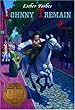
by Esther Forbes
Yearling
1987
336 pages
ISBN: 04440442508
Although Esther Forbes wrote fewer than a dozen books in her life, her 1942 biography Paul Revere and the World in Which He Lived won the Pulitzer Prize for History, and her 1943 historical novel Johnny Tremain
 was awarded the Newbery Medal. As of 2000--more than fifty years after its publication--Johnny Tremain was the 16th bestselling children's book in the United States. Set in the exciting pre-Revolutionary years of Boston, Johnny Tremain is the story of an orphaned fourteen-year-old silversmith apprentice, who after burning and deforming his hand with hot silver, must find work elsewhere.
Stopping in various shops to find suitable employment, Johnny wanders into a print shop that publishes The Boston Observer, a patriot newspaper. Johnny is hired to deliver papers to subscribers in outlying towns and takes lodging in a loft above the shop with Rab, the printer's apprentice. On Sundays, their sleeping loft becomes the meeting place of a secret club, the Boston Observers, whose members include Paul Revere, Sam and John Adams, John Hancock, Joseph Otis, and Dr. Joseph Warrens.
Johnny "changed from knowing little enough about the political excitement, and caring less, to being an ardent Whig," as he gets caught up in the growing tensions between the Whigs (Patriots) and Torries (British sympathizers) that lead to the Boston Tea Party, the midnight ride of Paul Revere, and the Battle of Lexington. Johnny Tremain is a story of pride, adventure, and hope, but one of sadness and loss, too.
Wednesday, April 20, 2011
RIP Michael Sarrazin (May 22, 1940-April 17, 2011)
Not too many people remember Michael Sarrazin, who died Sunday of cancer, but in my salad days he was one of my favorite movie actors. Tall and lanky with large blue eyes and lots of long brown hair, he was usually cast as a soulful drifter. In his time, he played opposite some of the biggest names in Hollywood: Paul Newman, Henry Fonda, Jane Fonda, George C. Scott, James Caan, and Barbara Streisand. His star dimmed in the materialistic eighties, which seemed not to have a place for soulful drifters. Following is a sampling of his movies.
- The Flim-Flam Man (1967). Mordecai Jones (George C. Scott) takes a young army deserter under his wing.
- Journey to Shiloh (1968). Miller Nalls is one of seven young men who ride off from Texas to fight in the Civil War.
- They Shoot Horses, Don't They? (1969). During the Depression Robert and Gloria (Jane Fonda) enter a grueling dance marathon.
- Sometimes a Great Notion (1970). Based on a Ken Kesey novel, this movie presents an Oregon family trying to keep their family logging business afloat.
- The Life and Times of Judge Roy Bean (1972). A western farce about a self-appointed frontier judge (Paul Newman).
- Harry in Your Pocket (1973). A professional pickpocket (James Coburn) teaches Ray how to pick pockets as part of a team.
- For Pete's Sake (1974). Brooklyn housewife (Barbara Streisand) decides to work as a prostitute to supplement her husband Pete's income.
- The Resurrection of Peter Proud (1975). A college professor begins having visions of a former life and is mysteriously drawn to a place he's never visited before--in this life.
- The Gumball Rally (1976). His last big movie is a fast, funny cross-country automobile road race.
Saturday, April 16, 2011
Like My New Year's Objectives, Better Late Than Never
In my last entry on my New Year's objectives I promised, yes promised, to update my progress by April Fool's Day. As you've gathered by now, I'm not the most disciplined person around, which is why I need to set yearly goals for myself in the first place. I'm two weeks late, but here I am with my update.
First off, I did manage to clean my entire domicile: scrubbing, sweeping, and dusting. One mere month later and my digs need cleaning again. So by this time next month, I expect I'll have cleaned the whole place again.
As to my consumption of produce, I took a hiatus while on spring break in Chicago, where I ate a lot of pizza, Chinese, and Italian beefs, and not so many fruits and vegetables. But, happily, I'm back home downing my daily V-8 plus three or four servings of whatever else is around, usually a banana, some broccoli, and some salad.
I'm still falling short of my 30 minutes of walking, and I've decided to dust off one of the bicycles in the garage and take it out for a spin every morning. That sounds like a lot more fun than a morning constitutional, and anything that gets me moving is good. I even count the housework towards my half hour of exercise.
As far as frugal existence, well, my grandmother saving string I am not. We seem to be spending a lot of money on takeout food again, a habit we reclaimed while on spring break. So this month I apply more discipline to saving money by refocusing on home cooked meals and eliminating all unnecessary spending.
In the spirit of saving the best for last, I have finally started work on revising my play. Inspired by Twyla Tharp's The Creative Habit: Learn It and Use It for Life, I've set myself a goal of writing or rewriting one scene a week.
No promises on when I'll report on my progress, but I will do so before school's out. At least that's the plan.
First off, I did manage to clean my entire domicile: scrubbing, sweeping, and dusting. One mere month later and my digs need cleaning again. So by this time next month, I expect I'll have cleaned the whole place again.
As to my consumption of produce, I took a hiatus while on spring break in Chicago, where I ate a lot of pizza, Chinese, and Italian beefs, and not so many fruits and vegetables. But, happily, I'm back home downing my daily V-8 plus three or four servings of whatever else is around, usually a banana, some broccoli, and some salad.
I'm still falling short of my 30 minutes of walking, and I've decided to dust off one of the bicycles in the garage and take it out for a spin every morning. That sounds like a lot more fun than a morning constitutional, and anything that gets me moving is good. I even count the housework towards my half hour of exercise.
As far as frugal existence, well, my grandmother saving string I am not. We seem to be spending a lot of money on takeout food again, a habit we reclaimed while on spring break. So this month I apply more discipline to saving money by refocusing on home cooked meals and eliminating all unnecessary spending.
In the spirit of saving the best for last, I have finally started work on revising my play. Inspired by Twyla Tharp's The Creative Habit: Learn It and Use It for Life,
I've set myself a goal of writing or rewriting one scene a week.No promises on when I'll report on my progress, but I will do so before school's out. At least that's the plan.
Thursday, April 14, 2011
Klondike Canids
The Call of the Wild and White Fang by Jack London, Signet Classic, 2010, 304 pages, ISBN:0451531590
In 1897 when Jack London was 21, gold was discovered in the Klondike. He left his home in Oakland, California to seek his fortune in the frozen north, but after an unsuccessful winter of mining, he returned home. Although he did not strike it rich in the Klondike Gold Rush, that winter did provide him with the fodder for his short stories and novels. In White Fang London describes the far north: "The land itself was a desolation, lifeless, without movement, so lone and cold that the spirit of it was not even that of sadness....It was the Wild, the savage, frozen-hearted Northland Wild."
The Gold Rush spells trouble for Buck, the lead character of Call of the Wild because men want strong dogs with thick coats to work in the cold. Buck is a domesticated dog leading a pleasant existence in the Santa Clara Valley (today known as the Silicon Valley) with his owner, Judge Miller, until he is betrayed by one of the gardener's helpers. After being kidnapped, tormented, starved, and beaten with a club, Buck is taken over 16 hundred miles north to work as a sled dog; his journey is more than physical: ultimately he returns to his primeval nature.
While Call of the Wild (first published in 1903) deals with a domesticated dog returning to the wild, White Fang (1906), its mirror novel, is about a wolf-dog hybrid that is domesticated. After being beaten and forced to viciously fight other dogs, White Fang meets a man who treats him with kindness. My son and I read these adventure stories together several years ago, and, while we found them quite exciting, we also found them quite emotionally stimulating. All manner of creatures--men, dogs, and wolves--display such visceral violence; the savage, cruel treatment of the dogs by the humans and the vicious killings by the dogs and wolves is at times difficult to read through. No books give a better sense of how cruel and unforgiving the nature of man, beast, and wilderness can be and demonstrate how close we really are to our primordial selves.
by Jack London, Signet Classic, 2010, 304 pages, ISBN:0451531590In 1897 when Jack London was 21, gold was discovered in the Klondike. He left his home in Oakland, California to seek his fortune in the frozen north, but after an unsuccessful winter of mining, he returned home. Although he did not strike it rich in the Klondike Gold Rush, that winter did provide him with the fodder for his short stories and novels. In White Fang London describes the far north: "The land itself was a desolation, lifeless, without movement, so lone and cold that the spirit of it was not even that of sadness....It was the Wild, the savage, frozen-hearted Northland Wild."
The Gold Rush spells trouble for Buck, the lead character of Call of the Wild because men want strong dogs with thick coats to work in the cold. Buck is a domesticated dog leading a pleasant existence in the Santa Clara Valley (today known as the Silicon Valley) with his owner, Judge Miller, until he is betrayed by one of the gardener's helpers. After being kidnapped, tormented, starved, and beaten with a club, Buck is taken over 16 hundred miles north to work as a sled dog; his journey is more than physical: ultimately he returns to his primeval nature.
While Call of the Wild (first published in 1903) deals with a domesticated dog returning to the wild, White Fang (1906), its mirror novel, is about a wolf-dog hybrid that is domesticated. After being beaten and forced to viciously fight other dogs, White Fang meets a man who treats him with kindness. My son and I read these adventure stories together several years ago, and, while we found them quite exciting, we also found them quite emotionally stimulating. All manner of creatures--men, dogs, and wolves--display such visceral violence; the savage, cruel treatment of the dogs by the humans and the vicious killings by the dogs and wolves is at times difficult to read through. No books give a better sense of how cruel and unforgiving the nature of man, beast, and wilderness can be and demonstrate how close we really are to our primordial selves.
Wednesday, April 6, 2011
Uncle Bill Knows Best

Family Affair (1966-1971)
Created by Don Fedderson and Edmund L. Hartmann
Starring Brian Keith, Sebastian Cabot, Kathy Garver, Anissa Jones, Johnnie Whitaker, and Mrs. Beasley
Family Affair
 is a gentle situation comedy about Bill Davis, a globetrotting civil engineer/bachelor (Brian Keith), and his British butler Mr. French (Sebastian Cabot) living a good, uncomplicated life in New York City until Bill finds himself the guardian of his deceased brother's three children (Kathy Garver, Anissa Jones, and Johnny Whitaker). Family Affair was one of several television shows in the sixties featuring motherless children being raised by their fathers. Bachelor Father, My Three Sons, The Andy Griffith Show, The Courtship of Eddie's Father, and even Bonanza centered on families without mothers.
Cissy, Buffy, and Jody have lost their father as well as their mother, but Uncle Bill steps in to fill the paternal role. Though he asserts that he knows nothing about raising kids, Uncle Bill demonstrates natural, down-to-earth child rearing instincts. For his part Mr. French fulfills the maternal duties of the day from feeding them to getting them to school to reading them bedtime stories. Mr. French often reads them Winnie the Pooh, an allusion to Sebastian Cabot's part as the narrator of the Winnie the Pooh series of animated shorts that Disney released in the sixties and seventies, the first, Winnie the Pooh and the Honey Tree, having debuted about six months before Family Affair.
Family Affair was one of the first situation comedies to debut in color, and the show advertises that in its opening credits with jaunty music over a kaleidoscope of red and blue and gold rhinestones. The sixties were ablaze with color anyway: carpets, appliances, and dishes were mustard and avocado. Women and little girls dressed in bright blues, reds, greens, and purples. Men wore suits of more muted colors, but their ties were brightly colored.
Like The Mod Squad, Family Affair is a show I haven't seen since it originally aired on television in the 1960s. And like The Mod Squad, Family Affair defines the sixties for me. But whereas The Mod Squad was more counterculture, Family Affair was cosmopolitan and mod--at least from the point of view of a seven-year-old girl. UN ambassadors, stewardesses, civil engineers--all quintessential sixties careers and all appear at some point on Family Affair, as does folk music and the British Invasion, which by 1966 had fully overtaken America. The folk music is represented by the fictional band, the Velvet Vultures whom Cissy adores, and the British Invasion appears in the form of Mr. French's nephew, an exchange student from London who gets uncomfortably familiar with Cissy. Uncomfortably for Mr. French that is. The young people of the sixties were tearing off the shackles of class segregation and formality and widening the generation gap.
But within the Davis household, the conflicts are more provincial. The kids worry they're getting in Uncle Bill's and Mr. French's hair, and the adults worry they're not raising the kids right. One of the few episodes I remember is "Mrs. Beasley, Where Are You?" Mr. French has accidentally knocked Buffy's doll over the balcony. They turn the apartment building upside down searching for the doll, even accusing another tenant of stealing it. When Mrs. Beasley fails to turn up, Mr. French takes Buffy to the store to buy a new doll, but even the doll that resembles Mrs. Beasley is not an adequate substitute. Cissy informs the adults that Mrs. Beasley is not just a doll; she's the one friend Buffy's had through the deaths of her parents and the separation from her siblings before they are finally reunited and placed together under Uncle Bill's care. Worry not; just as Uncle Bill has rescued and provided shelter and care for his nieces and nephew, he rescues Mrs. Beasley and places her safely back in Buffy's arms again. And, if you want to know how he does it, you'll have to watch Family Affair.
Wednesday, March 30, 2011
Reflections of Mid Life

Men of a Certain Age (2009)
Created by Ray Ramano and Mike Royce
Starring Ray Ramano, Scott Bakula, and Andre Braugher
When my son was just born, Everybody Loves Raymond
 first aired on tv. I enjoyed it for awhile, but it got a bit stale. How often can you watch a show whose plot revolves around sibling rivalry between two middle-aged men and their meddling mother? So when I saw that Ray Ramano had a new show, I didn't rush in to view it. But after seeing promos for Men of a Certain Age
 at the movie theater three or four times, I decided to give it a watch. I'm glad I did. I was no fan of Ray Ramano before, but I am now.
This coming-of-age comedy focuses on three men in their late forties/early fifties who have been friends since at least college. (The pictures in the opening credits indicate they've been friends since they were small boys.) Owen (Andre Braugher) is married with two kids. He is an overweight diabetic used-car salesman who works for his dad (Richard Gant). He hates his dead-end job; his dad, a former NBA Lakers player, has picked another, more ambitious, employee to take over the dealership when he retires, as he has no faith in his son.
Terry (Scott Bakula) is the Peter Pan character who describes himself as "professionally charming." A failed actor and part-time yoga teacher, he wants no strings in his personal life, preferring to date women in their twenties over those his own age. Joe (Ray Ramano) had aspirations to be a pro golfer, but now owns a party store. Separated from his wife (Penelope Ann Miller) and the father of two kids, Joe has a gambling addiction that puts him in regular contact with some pretty shady characters, especially Manfro, played by Jon Manfrellotti who worked with Ramano on Everybody Hates Raymond. The tone of the show alternates between humorous and bittersweet. There are some especially poignant moments when Owen helps out Terry.
The soundtrack mirrors Joe's taste--and mine--in seventies rock music. Some of the many great tunes we are treated to include "Reflections of My Life," "One Tin Soldier," "Willin,'" "When I Grow Up to Be a Man," "Draggin' the Line," "Daydream," and "Taking Care of Business." There's a really funny moment when one of Joe's teenaged employees says to him, "I know how much you like that music from the forties." "Seventies," Joe corrects.
Being a woman of a certain age, I can certainly relate to the struggles of these three men as they face middle age. They struggle with family, with marital and romantic relationships, with jobs and their places in society, with lost opportunities, with hopes and goals for their futures. Time is pressing, but they aren't done living.
Subscribe to:
Posts (Atom)